
Individual therapy
Keep the client's appointments, documentation, communication, billing, forms, and follow-up connected in one familiar case.
EHR software for relational therapy
PracticeRunner is practice-management and EHR software for individual, couple, family, and group therapy. Persistent cases keep participants, attendance, documentation, portal access, communication, billing, and payments connected over time.
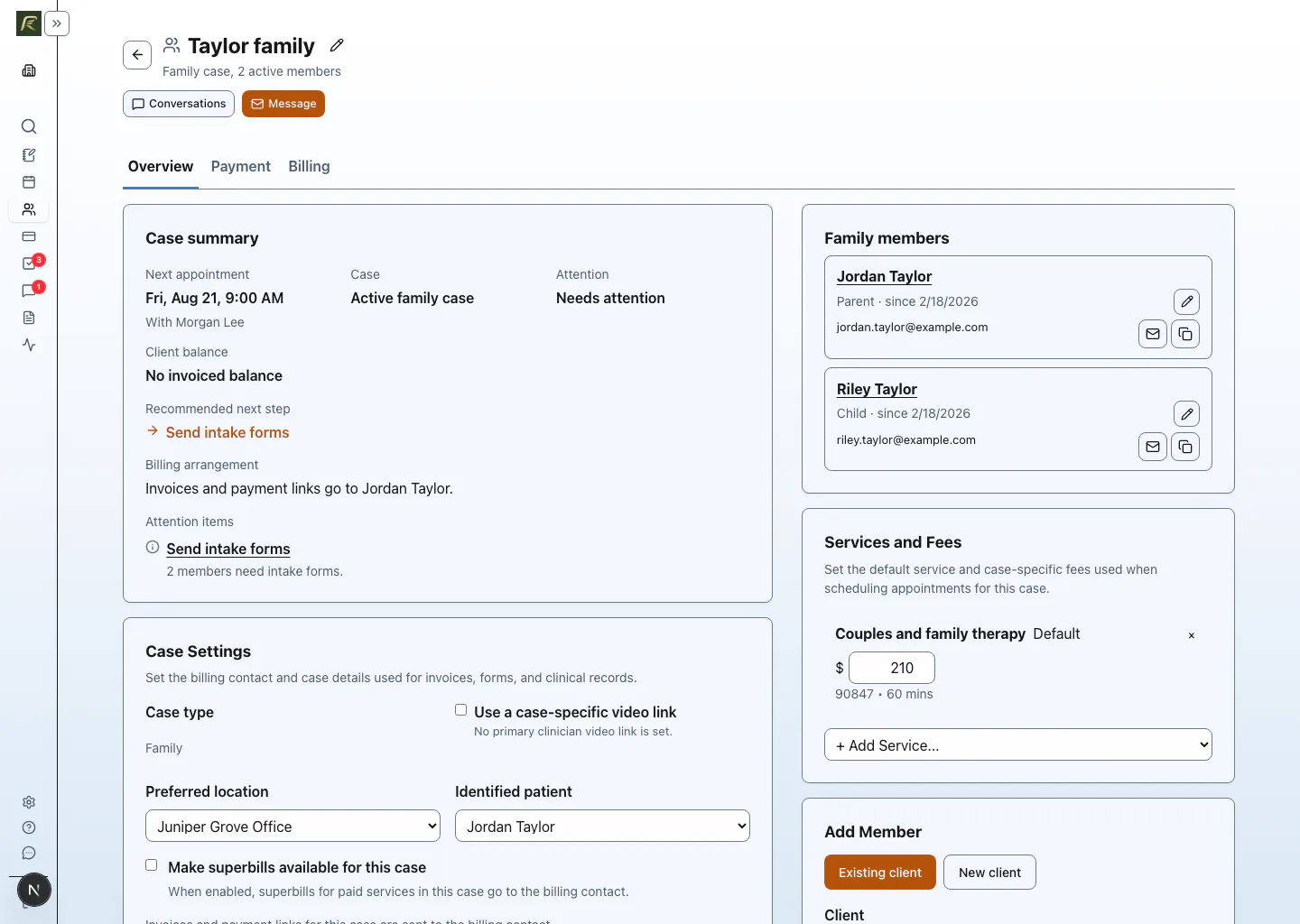
One durable case model
A case is the stable home for the work. The language and available tools adapt to the client, couple, family, or group instead of flattening every service into several disconnected individual charts.
Keep the client's appointments, documentation, communication, billing, forms, and follow-up connected in one familiar case.
Keep both partners connected to one couple case without making either person the administrative owner of the relationship.
Keep the family roster and shared history intact while attendance, portal access, and practical responsibilities change from session to session.
Keep an ongoing group intact between meetings, with a persistent roster, session attendance, group documentation, communication, and participant billing arrangements.
Connected does not mean collapsed
One person may receive care, another may sign forms, another may manage scheduling, and another may pay. PracticeRunner keeps the shared case intact while access and responsibilities remain deliberate.
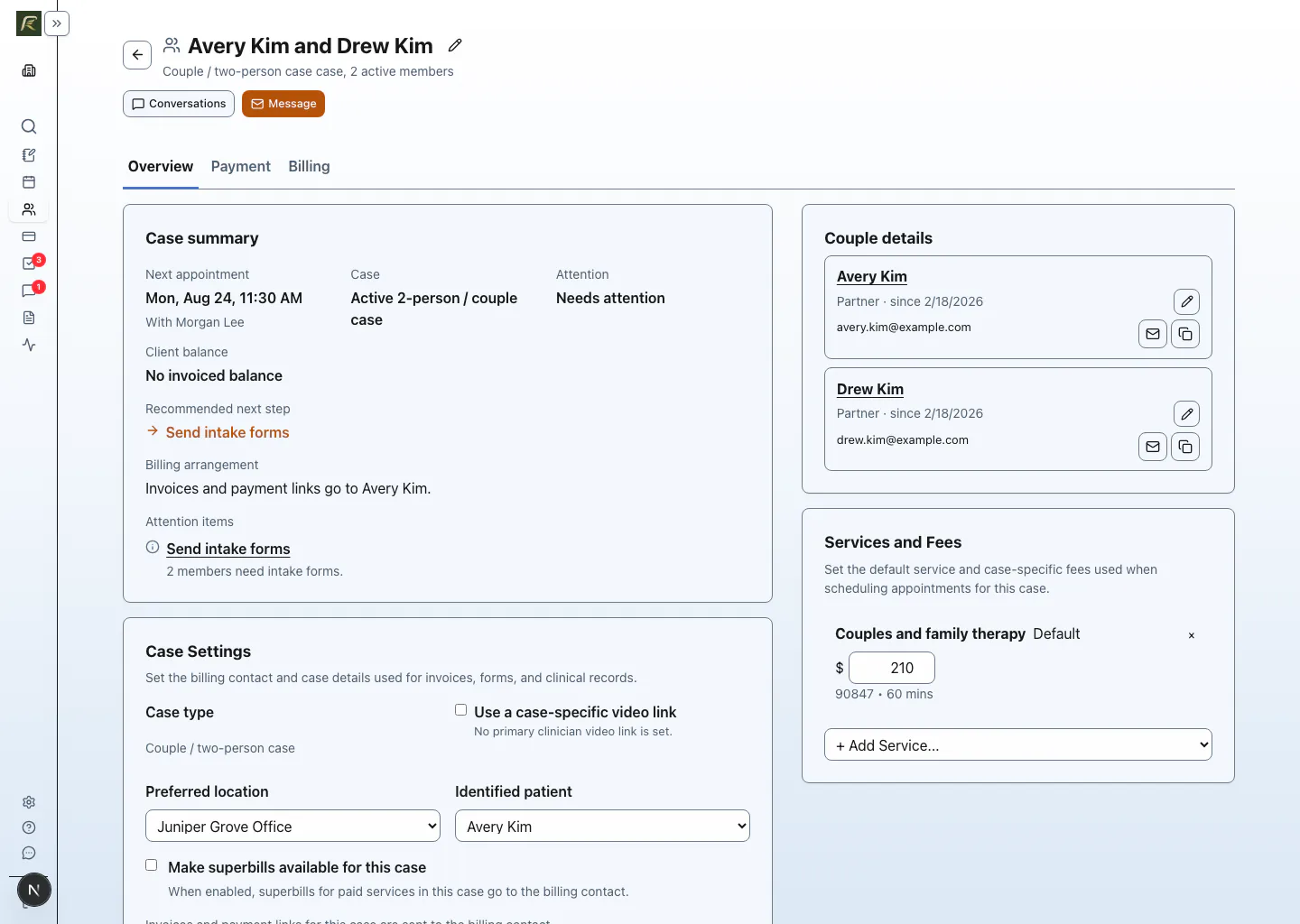
Couples and families
Appointments, shared documentation, communication, billing history, and scheduling context stay with the couple or family. Individual identities and sensitive participant-specific information remain separate where they need to be.
Ongoing therapy groups
The group persists between meetings. Its roster, appointments, attendance, shared documentation, communication, forms, participant-specific context, invoices, and payments remain part of one operational model.
Practice management designed for the way therapy is really practiced
PracticeRunner is available for independent therapists and growing practices, with hands-on onboarding and direct founder support during this early stage.